
LinkedIn Newsletter for Nigerian B2B Consultants: A Launch Plan
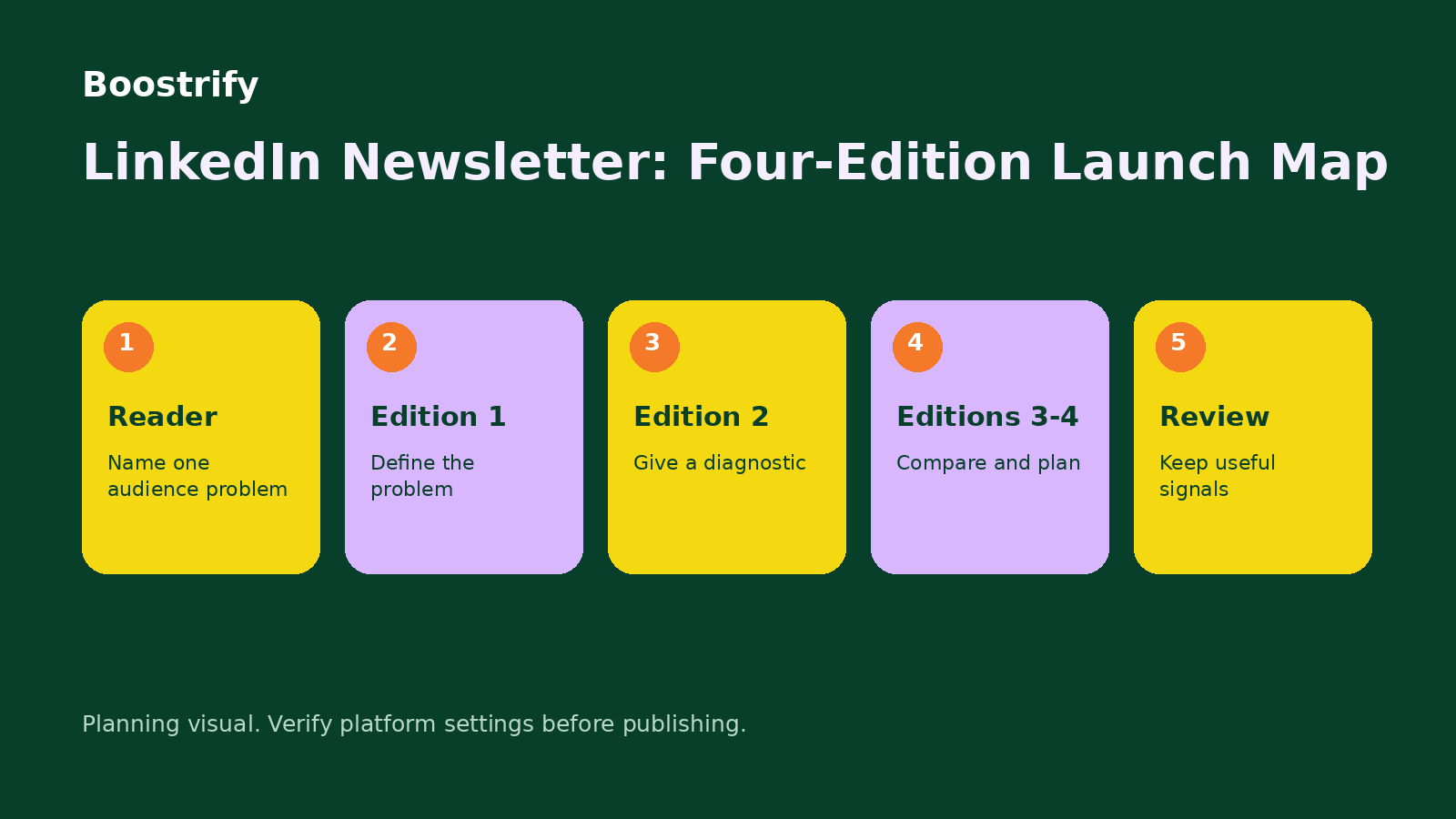
A useful LinkedIn newsletter for a Nigerian consulting business starts with one narrow promise and a realistic publishing rhythm. Choose a problem your ideal client repeatedly faces, plan four connected editions before launch, and give every edition one practical action. The newsletter should demonstrate how you think. It should not read like a weekly sales brochure.
LinkedIn says members can publish articles, while eligible members can create newsletters that other members can discover, read and subscribe to. The article editor is a desktop feature, so prepare your draft, cover image and links before opening the editor. Review LinkedIn's article publishing instructions and newsletter guidance before you begin.
Start with a precise reader and promise
“Business advice” is too broad. A clearer promise is “A monthly field note for Nigerian logistics firms that want fewer delivery complaints” or “Practical finance controls for growing professional firms.” A narrow topic helps a potential subscriber decide whether the newsletter is for them.
Write one sentence using this pattern: This newsletter helps [specific reader] make [specific decision] without [common problem]. Test the sentence against three questions:
- Can the right reader recognise themselves immediately?
- Can you produce at least twelve useful editions without repeating yourself?
- Does the subject connect naturally to work you are qualified to discuss?
A newsletter is not a substitute for evidence. Use examples you are allowed to share, public information, your own frameworks and clearly labelled hypothetical situations. Do not invent client results or imply that a private project is public.

Plan the first four editions before launch
The first four editions should form a short learning path. This makes planning easier and gives a new subscriber a reason to read the archive.
- Edition one: define the problem. Explain what is happening, who it affects and what a sensible first response looks like.
- Edition two: show the diagnostic. Give a checklist, scorecard or set of questions readers can use.
- Edition three: compare options. Explain trade-offs, costs, responsibilities and warning signs without forcing one answer.
- Edition four: create an action plan. Turn the earlier lessons into a practical 30-day sequence.
Give each edition one main point. A 900-word article with one clear job is more useful than a long collection of disconnected observations. Use descriptive subheadings, short paragraphs and a closing action that can be completed without hiring you.
Choose a cadence you can keep
LinkedIn asks authors to set a publishing frequency when creating a newsletter. Treat that as a commitment to readers. A monthly edition is often more realistic for a small consultancy than a weekly schedule. Leave time for research, fact checking, internal approval and a strong cover image.
Create a simple production calendar: research in week one, outline in week two, draft in week three, and review and publish in week four. If several colleagues contribute, assign one owner. A newsletter with many approvers but no owner usually becomes late or vague.
Build a useful edition page
Write a direct title, a short opening answer and a body that delivers the promised value. Add links only when they help the reader verify a claim or take the next step. LinkedIn's editor supports a cover image, links and other article elements. Preview the article before publishing and check it on both a wide and narrow screen.
Your call to action should match the edition. “Reply with the control you will review this week” is better than asking for a discovery call after every paragraph. When a reader genuinely needs help, offer a clear route to your service page or contact form.
Promote the edition without confusing attention with demand
Publish a short LinkedIn post that gives the strongest idea from the edition, then link to the full article. Ask colleagues to share it only when it is relevant to their networks. You may also compare current Boostrify services. For example, the catalogue lists a Nigerian LinkedIn post likes service. Check the live description before ordering because audience, speed, refill conditions and other terms vary by service.
Paid engagement can add visible activity to a post. It does not prove that subscribers are decision-makers, create qualified leads or guarantee enquiries. Keep organic distribution at the centre: notify existing clients who have asked for updates, share the edition in relevant conversations and repurpose one useful idea into a later post.
Measure the newsletter as a business asset
Use a small monthly review. Record editions published, profile visits or newsletter metrics available to you, replies that mention the topic, relevant conversations started and enquiries that can reasonably be traced to an edition. Do not treat every impression as a lead.
After four editions, keep the sections readers use, remove repeated filler and update your topic promise if it attracts the wrong audience. The best signal is not the largest number. It is evidence that the right people understand your expertise and know the next appropriate step.
Before you use Boostrify
Read the exact service description and the current Boostrify terms. The terms say the target profile must be public, duplicate orders should not be placed while an order is active, links or IDs should not be changed during processing, and start times can vary. An instant start label is not a promise of instant completion.
When the newsletter, profile and edition are ready, create a Boostrify account, compare the available LinkedIn options and choose only a service whose audience and conditions match your plan.
Use an editorial checklist for every edition
Before publishing, ask a colleague to read the draft as the intended client. They should be able to identify the problem, the recommended action and any important limitation without needing your explanation. Check names, dates, figures and links against their sources. Remove confidential details and claims that sound stronger than the evidence.
Then review the edition as a subscriber. Does the title describe the real subject? Does the opening answer arrive quickly? Are the examples useful to a Nigerian business without pretending that every company has the same budget or process? Is the closing action proportionate to the advice? These questions protect the publication from becoming a sequence of sales pitches.
Keep a small idea bank after launch. Add questions from calls, workshops and public conversations, but record only information you are allowed to use. Group related questions into future editions. This turns normal consulting work into responsible editorial research without presenting private client experience as a public case study. A dependable system is more valuable than a burst of enthusiasm followed by silence.
