SoundCloud Release Checklist for Nigerian DJs and Producers
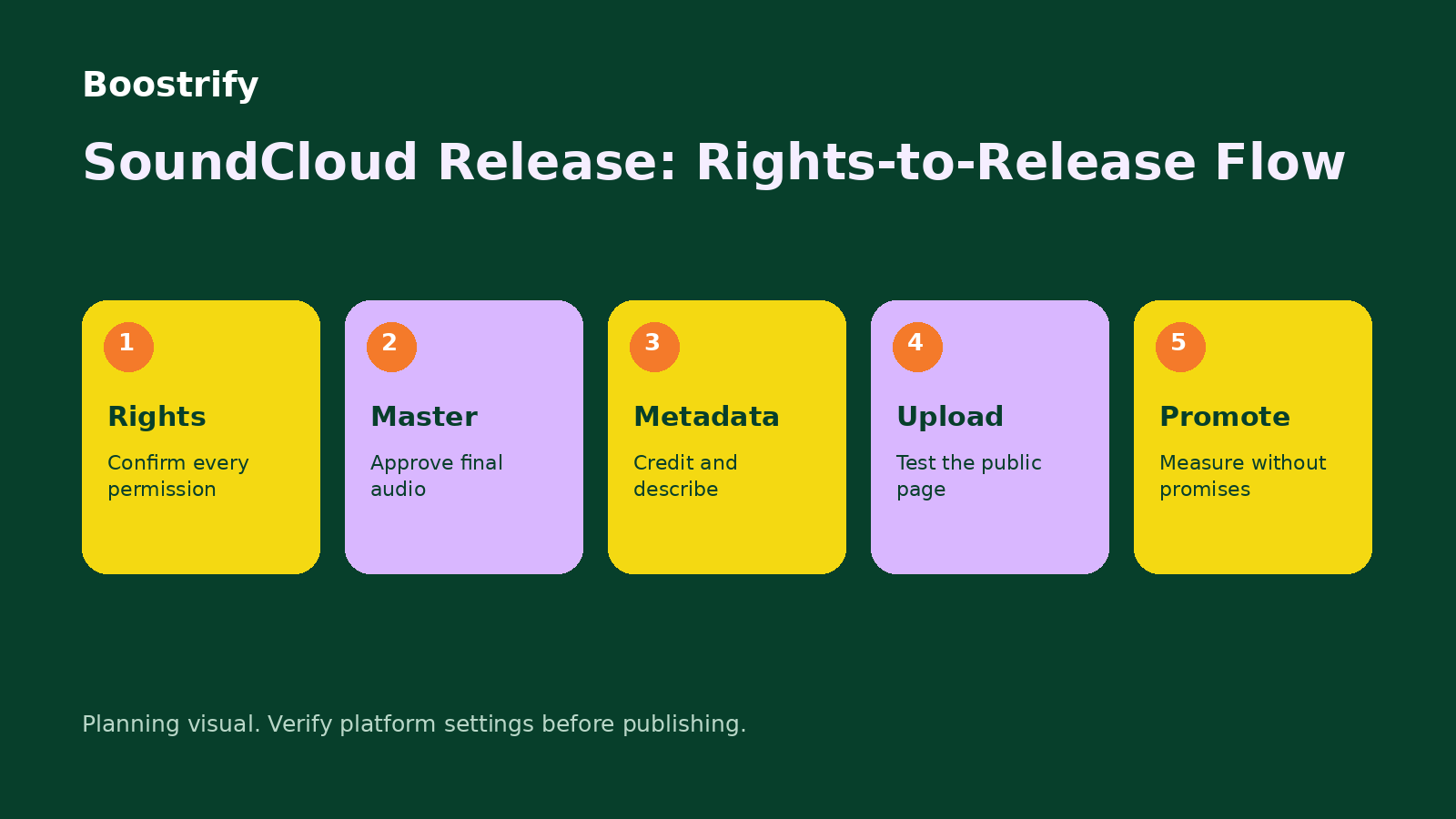
A SoundCloud release should be ready before promotion starts. Confirm that you have the rights to upload the audio, export a strong master, prepare accurate credits and artwork, complete the metadata, test the public page and then plan a measured rollout. Promotion cannot repair an uncleared sample, a confusing title or a broken profile.
This matters especially for DJ mixes. SoundCloud's official guidance says you need permission to use all tracks included in a DJ mix. Multiple rights holders may control a work, so permission from one person may not cover every right. Check SoundCloud's DJ mix copyright guidance and do not treat this checklist as legal advice.
Clear the rights before announcing a date
Make a rights sheet for the recording. List the master owner, writers, featured artists, producers, sampled material, cover art owner and any third-party tracks. Store licences and written permissions where you can retrieve them.
If you receive a copyright complaint, respond truthfully. SoundCloud asks people disputing a claim to describe their rights and provide accurate information. Its help material notes that misrepresenting rights can lead to account termination. If your position is unclear, get qualified advice before uploading.
Export and listen to the final master
Listen from beginning to end on headphones and ordinary speakers. Check the opening, ending, silent gaps, clipping, unexpected edits and the balance between tracks. Use the same final file you approved, not an earlier export with a similar name.
SoundCloud supports several audio formats and recommends lossless formats such as WAV, FLAC, AIFF or ALAC for the best source quality. Review the current upload requirements before exporting because supported formats and limits can change.

Prepare metadata that a listener can understand
Metadata is the information attached to the track. At minimum, prepare a consistent artist name, clean title, version or mix name, genre, description, credits, release date, artwork and relevant links. Spell collaborators' names exactly as they use them.
Avoid stuffing the title with promotional phrases. Put context in the description: what the release is, who contributed and where listeners can find the next appropriate link. If the track contains explicit content, label it correctly. If downloads are enabled, remember that listeners may receive the original uploaded file, so remove private metadata and confirm the file is the intended master.
Make the profile ready for a new listener
Update your profile image, short biography and links before sharing the track. Pin or highlight the most relevant work if your plan allows it. A visitor who likes the release should be able to understand your sound and find another strong track without searching through an untidy archive.
Check the page while signed out or on another device. Confirm the artwork crop, title, description, credits and links. Do not promote a private or unavailable page unless the service you plan to use explicitly supports that format.
Plan a release sequence, not one blast
Use three stages. Before release, share a short, rights-cleared preview and the date. On release day, post the direct track link with one sentence about the sound or story. After release, share a production detail, mix note or short performance clip that gives people a fresh reason to listen.
Send the track personally only to people who have asked for your work or genuinely cover the style. A short, relevant note is better than mass tagging. For a DJ mix, include the information and permissions required for the material you used.
Use Boostrify without overstating the result
Boostrify's current catalogue includes Nigerian-targeted SoundCloud options. You can compare them on the services page. One current example is SoundCloud Plays described as Real Nigerians. Read its live description before ordering because service audience, link format, delivery and refill conditions can change.
Purchased plays can add a defined quantity of activity. They do not prove attentive listening, convert listeners into fans, guarantee reposts, secure bookings or create chart placement. Do not present the number as evidence of organic demand. Keep promotion separate from your editorial, outreach and community work.
Review quality, not just the play count
Track what you can verify: listens reported by the platform, completion or engagement information available to you, profile visits, follows, reposts, comments, direct replies and clicks to the next destination. Note which actions came from your own outreach and which coincided with paid activity.
Give the release enough time before judging it. If people reach the page but do not explore the profile, improve the description, artwork or catalogue path. If listeners ask the same question about credits or downloads, fix the metadata. Do not solve every weak signal by buying more plays.
Complete the final order checks
Before using Boostrify, read the exact service description and current terms. The target must be public. Do not place duplicate orders for the same link while an order is active, and do not change the link or ID during processing. Start time can vary, and an instant start label does not mean instant completion. The terms also warn users to keep purchases reasonable and state that permanence is not guaranteed.
When the rights, audio, metadata and public page are ready, create a Boostrify account, compare the SoundCloud services and choose only the option that matches your target and responsible rollout.
Create a release file that your team can reuse
Keep one folder containing the approved master, artwork source, square export, credits, lyrics if relevant, permissions, release description and link list. Use clear version names so a promoter or collaborator does not accidentally share an old file. If a label, featured artist or designer approves material, record the approval date and scope.
Prepare two short descriptions: one sentence for social posts and a longer paragraph for the SoundCloud page or press note. Both should describe the music accurately. Avoid claims such as “number one” or “the biggest release” unless you have independent evidence and the wording is genuinely useful.
Finally, define the next destination. It might be another original track, a booking page, a mailing list or a verified artist profile. Check that the link works on mobile and that the destination matches the promise. A release campaign is easier to measure when it has one sensible next step instead of several competing calls to action. Keep the rights file after launch because questions can arise long after the first week of promotion.
